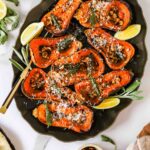
Roasted Honeynut Squash
This Roasted Honeynut Squash is everything I want in a fall side dish. It’s naturally sweet, tender, and caramelized, with a buttery garlic sage topping that adds just the right amount of savory flavor. I love how easily it comes together.
Servings: 4 servings
Calories: 176kcal
Ingredients
- 4 honeynut squash cut in half and deseeded
- 2 tablespoons olive oil
- ½ teaspoon kosher salt or more to taste
- 4 tablespoons unsalted butter
- 10 leaves sage fresh
- 4 cloves garlic minced
- 1 teaspoon pure maple syrup
- ½ medium lemon for serving
Optional Toppings:
- pecans or hazelnuts, toasted and chopped
- Parmesan freshly grated
Instructions
- Preheat the oven to 425°F. Line a large baking sheet with parchment paper.
- Wash and dry the honeynut squash. Carefully slice each squash in half lengthwise and scoop out the seeds and stringy pulp. If needed, trim a thin slice from the bottom end first to help stabilize the squash while cutting.
- Arrange the squash halves cut-side up on the prepared baking sheet. Drizzle with the olive oil, rub it over the flesh, and season evenly with the kosher salt.
- Roast for 40–50 minutes, depending on the size of the squash, until the flesh is deeply golden in spots and a fork slides easily into the thickest part. For more caramelization, flip the squash cut-side down for the last 10–15 minutes.
- During the last few minutes of roasting, melt the butter in a small skillet over medium heat. Continue cooking, swirling the pan, until the butter foams and develops golden-brown flecks and a nutty aroma, about 3–5 minutes.
- Add the sage leaves and cook for 1–2 minutes, until crisp. Reduce the heat to low, add the minced garlic, and cook for about 30 seconds, just until fragrant. Immediately remove the skillet from the heat to prevent burning, then stir in the maple syrup.
- Arrange the roasted squash on a platter and spoon the garlic-sage brown butter over the top. Add a small squeeze of lemon juice to balance the richness, if desired. Finish with the optional toasted nuts or Parmesan for extra texture and flavor.
Notes
- Choose similar-sized squash. Pick honeynut squash that are roughly the same size so they roast evenly. Smaller squash may cook faster, so start checking for tenderness around 35 minutes.
- Make cutting easier. Honeynut squash has firm skin, so use a sharp knife and a stable cutting board. Microwave the whole squash for 30–60 seconds if it's difficult to cut.
- Don't overcrowd the pan. Leave some space between the squash halves so the hot air can circulate. This helps the edges caramelize instead of steam.
- Roast cut-side down for extra caramelization. Flip the squash during the last 10–15 minutes of roasting. Direct contact with the hot baking sheet helps develop deeper golden edges.
- Check for tenderness. The squash is ready when a fork easily slides into the thickest part. Avoid overcooking, or the flesh can become too soft.
- Watch the brown butter closely. Butter can go from perfectly golden to burnt in seconds. Swirl the pan frequently and remove it from the heat once you see golden-brown flecks and smell a nutty aroma.
- Add the garlic last. Garlic burns quickly in hot butter, so add it after the sage has crisped up. Cook for about 30 seconds, just until fragrant.
- Save the squash seeds. Rinse and dry the seeds, then toss them with olive oil and salt. Roast until crispy for an easy, crunchy topping.
- Finish with fresh lemon. A small squeeze of lemon juice balances the richness of the garlic sage brown butter and brings out the squash's natural sweetness.
- Make it ahead. Roast the squash up to one day in advance and refrigerate. Reheat at 375°F for 10–15 minutes, then prepare the brown butter fresh before serving.
- Store leftovers properly. Keep leftover squash in an airtight container in the refrigerator for up to 4 days. Store the brown butter separately when possible to preserve the texture.
- Use leftovers creatively. Scoop out the roasted flesh and add it to soups, grain bowls, or fall salads. You can also freeze the flesh for up to 3 months for later use.
Nutrition
Calories: 176kcal | Carbohydrates: 4g | Protein: 0.5g | Fat: 18g | Saturated Fat: 8g | Polyunsaturated Fat: 1g | Monounsaturated Fat: 8g | Trans Fat: 0.5g | Cholesterol: 30mg | Sodium: 293mg | Potassium: 42mg | Fiber: 0.5g | Sugar: 1g | Vitamin A: 459IU | Vitamin C: 8mg | Calcium: 16mg | Iron: 0.2mg