

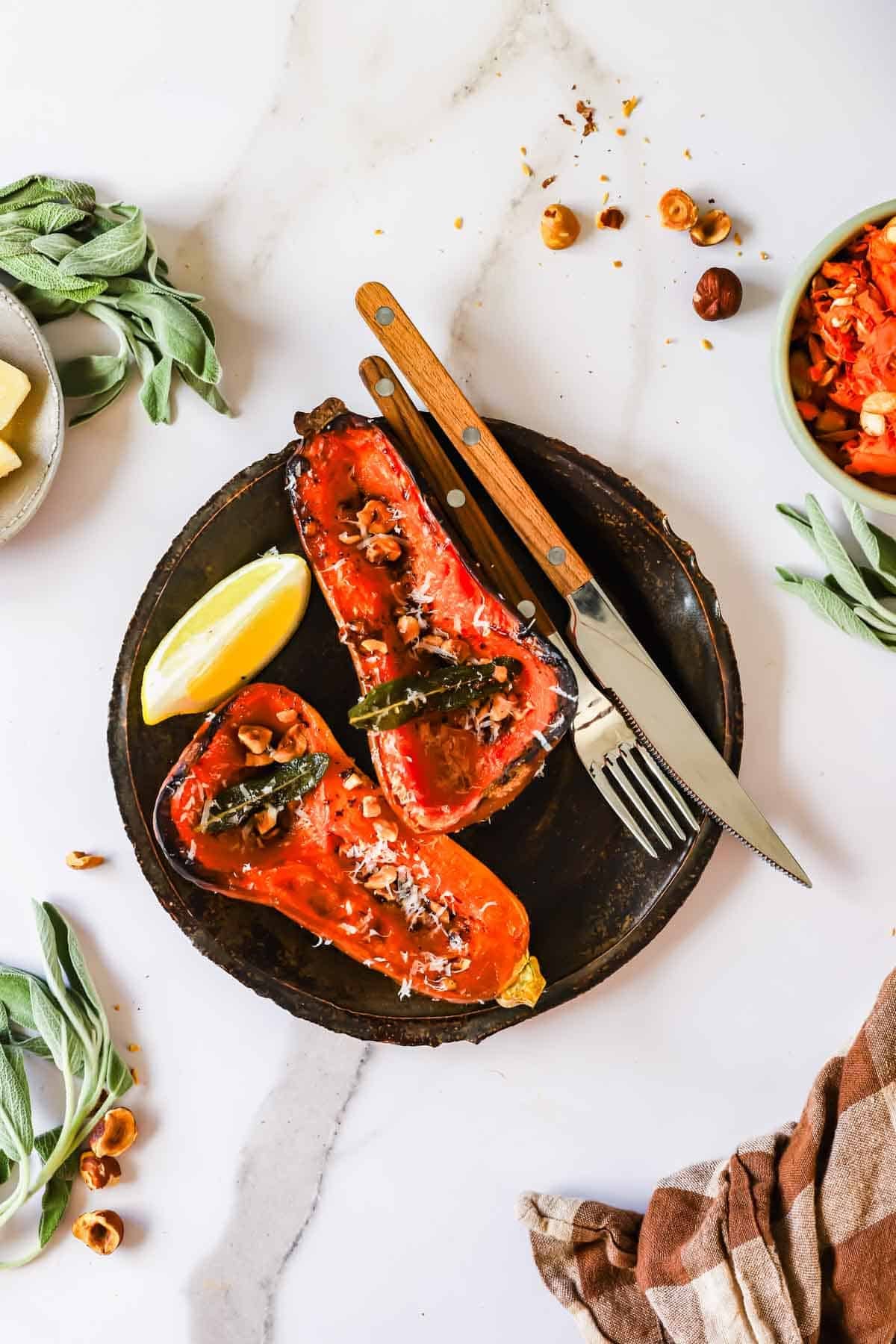
This Roasted Honeynut Squash is everything I want in a fall side dish. It’s naturally sweet, tender, and caramelized, with a buttery garlic sage topping that adds just the right amount of savory flavor. I love how easily it comes together.
Jump to Recipe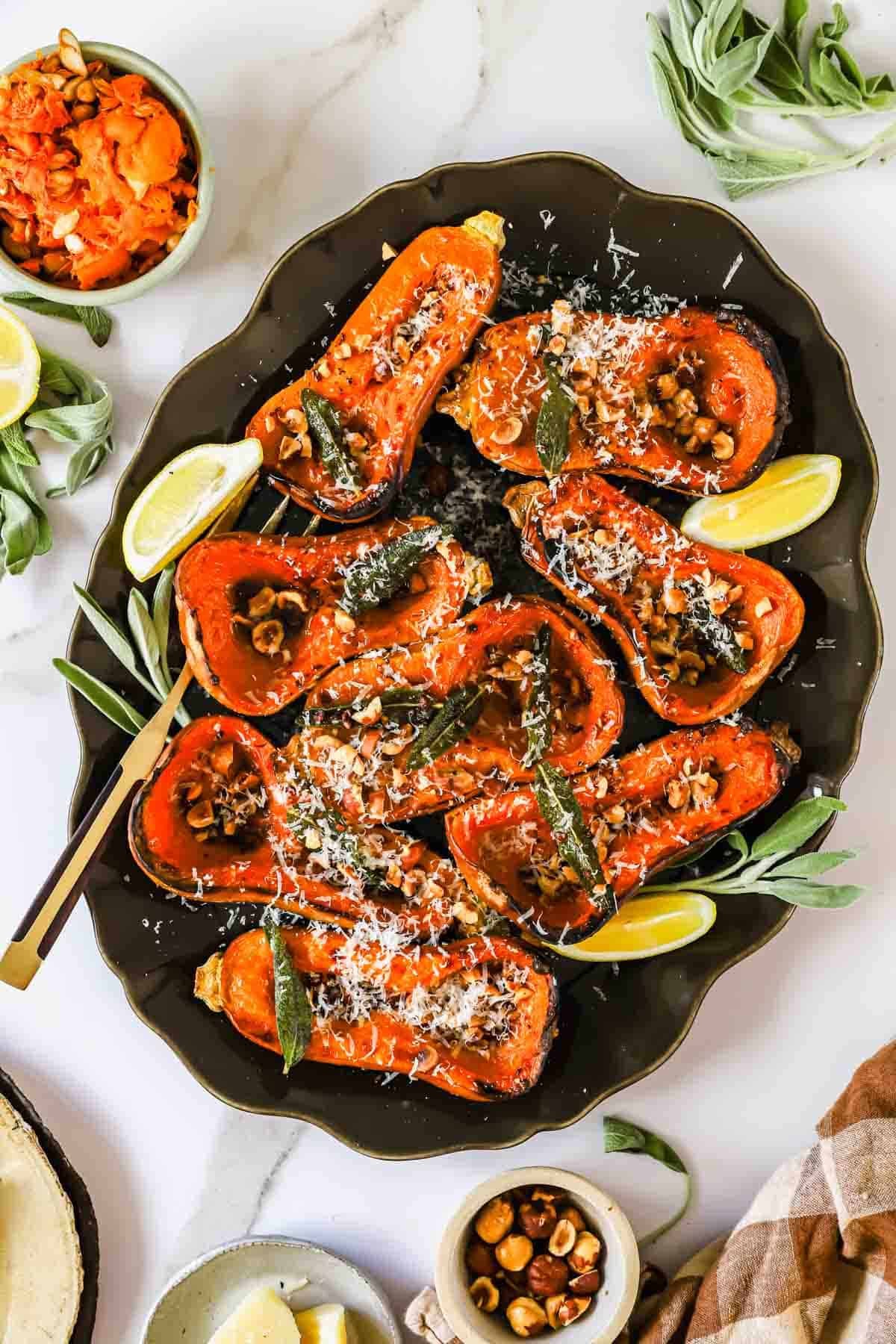
Why This Recipe Works
I love making this Roasted Honeynut Squash when fall squash is in season. It’s an easy side dish that feels special enough for the holidays. Here’s why it’s a favorite:
- Sweet, Caramelized Edges: Roasting brings out the squash’s natural sweetness and gives it beautiful golden edges. I love that sweet, roasted flavor, just like in my Maple Roasted Butternut Squash.
- Garlic Sage Brown Butter: The nutty brown butter, crispy sage, and fragrant garlic add so much flavor. A little maple syrup balances the savory notes, similar to the buttery maple flavors in my Roasted Delicata Squash.
- Soft and Creamy Texture: Honeynut squash becomes wonderfully tender and creamy as it roasts. The skin is thin and edible, so there’s no peeling required.
- Simple to Make: I love recipes where the oven does most of the work. Just halve, season, and roast the squash, then whip up the garlic sage brown butter in a few minutes.
- Perfect for Holiday Dinners: These golden squash halves look beautiful on a serving platter with crispy sage and toasted nuts. They’re easy enough for a weeknight but special enough to serve alongside Thanksgiving turkey or a Sunday roast.

If you enjoyed this recipe, please come back and give it a rating. I ❤️ hearing from you!
Ingredients
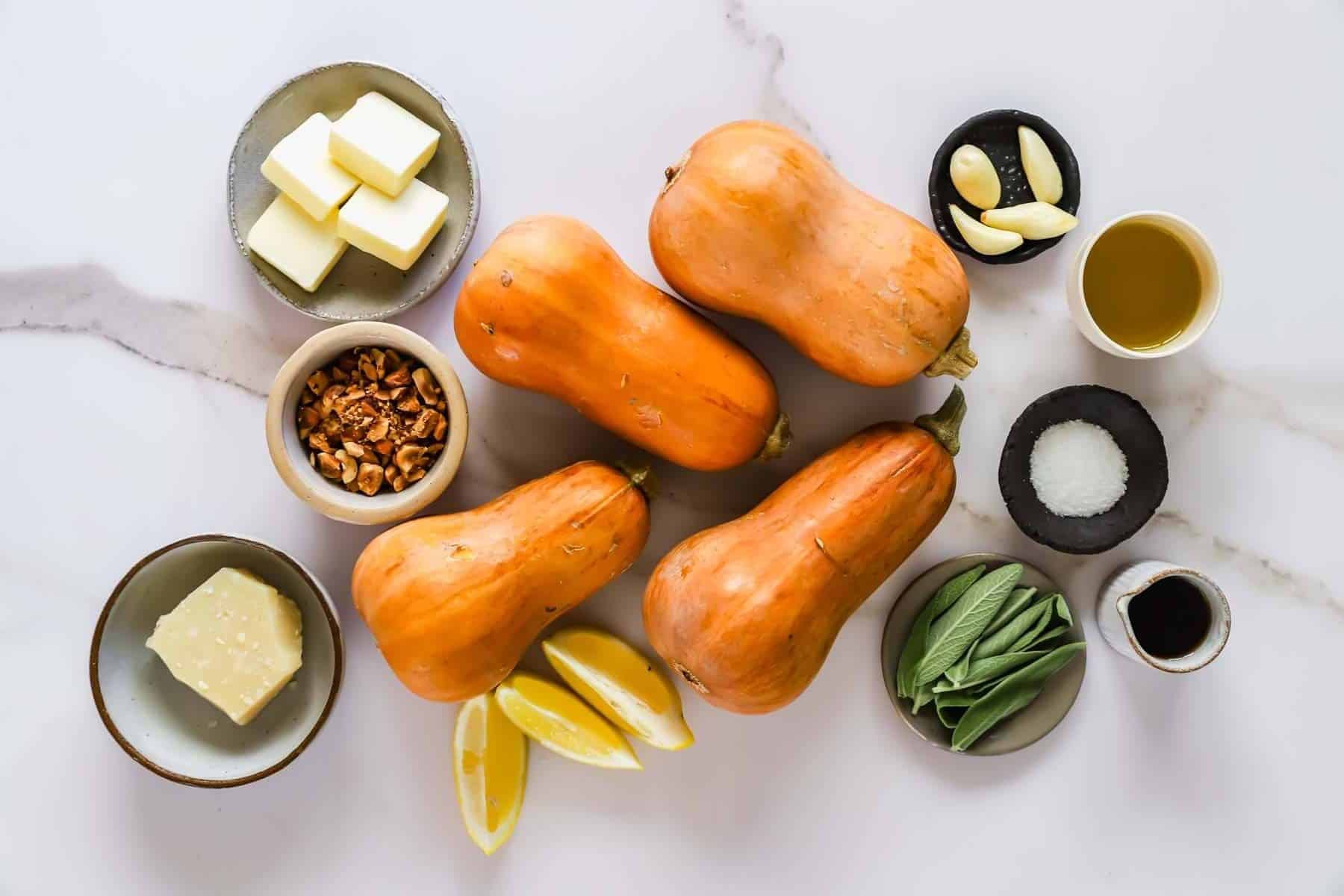
- Honeynut Squash – These small squash are naturally sweet, with a rich, creamy texture that gets even better when roasted. I like choosing squash that are similar in size so they cook evenly. Small butternut or delicata squash work as substitutes.
- Fresh Sage Leaves – Add a warm, earthy flavor and turn wonderfully crispy in the brown butter. Fresh thyme or rosemary are great alternatives.
- Garlic – Freshly minced garlic adds a savory, aromatic flavor to the butter. I like adding it toward the end so it becomes fragrant without burning.
- Pure Maple Syrup – Just a little enhances the squash’s natural sweetness and balances the savory garlic and sage. I recommend using pure maple syrup for the best flavor.
- Fresh Lemon – A squeeze of lemon juice adds brightness and cuts through the richness of the brown butter. It helps balance all the flavors.
- Toasted Pecans or Hazelnuts (Optional) – Add a little crunch and extra nutty flavor. Toasted pumpkin seeds are another delicious option.
- Freshly Grated Parmesan (Optional) – Adds a salty, savory finish that complements the sweet squash and buttery sauce. I recommend grating it fresh for the best flavor and texture.
For full list of ingredients and instructions, see recipe card below.
Instructions
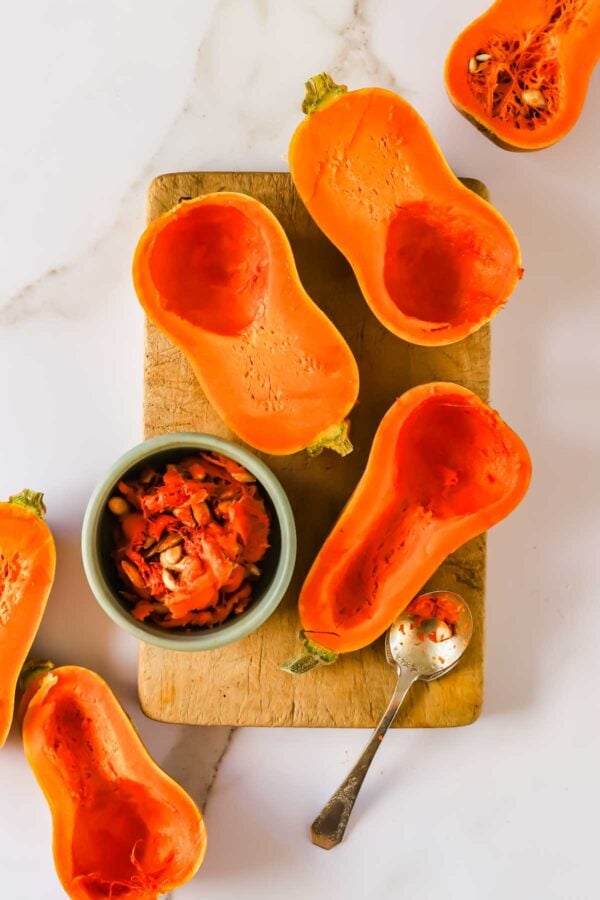
- Prep the squash: Preheat the oven to 425°F. Halve the squash lengthwise and remove the seeds and pulp.
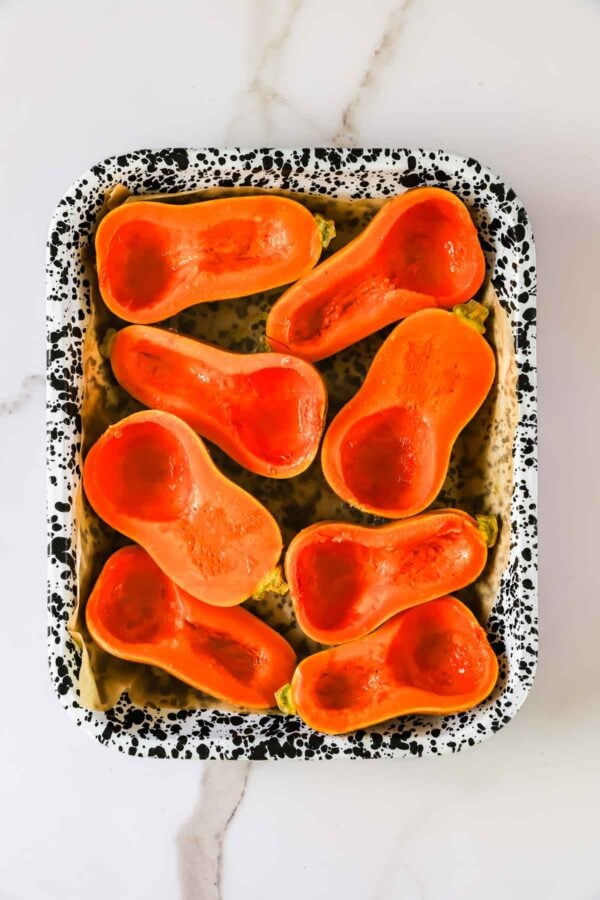
- Season and arrange: Place the squash cut-side up on a lined baking sheet. Rub with olive oil and season with salt.
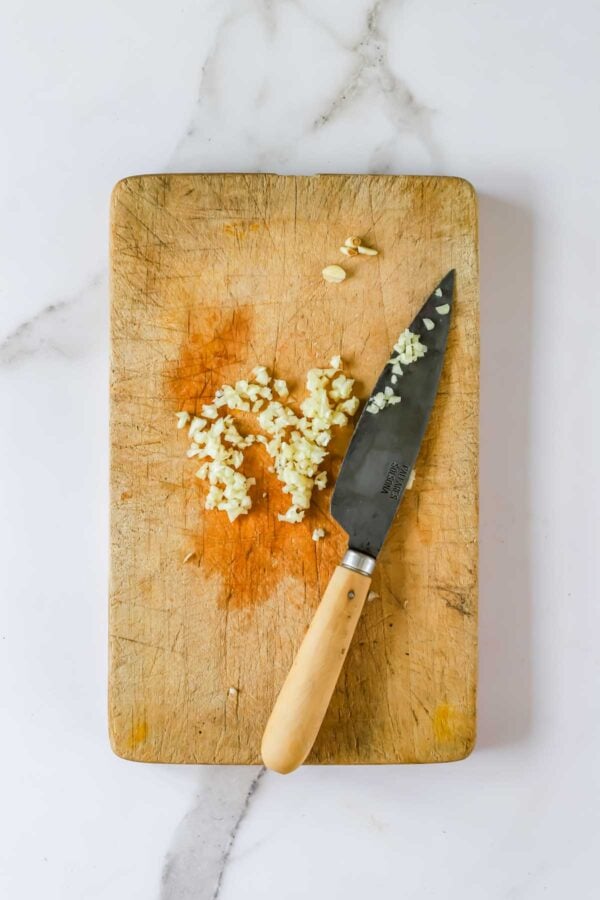
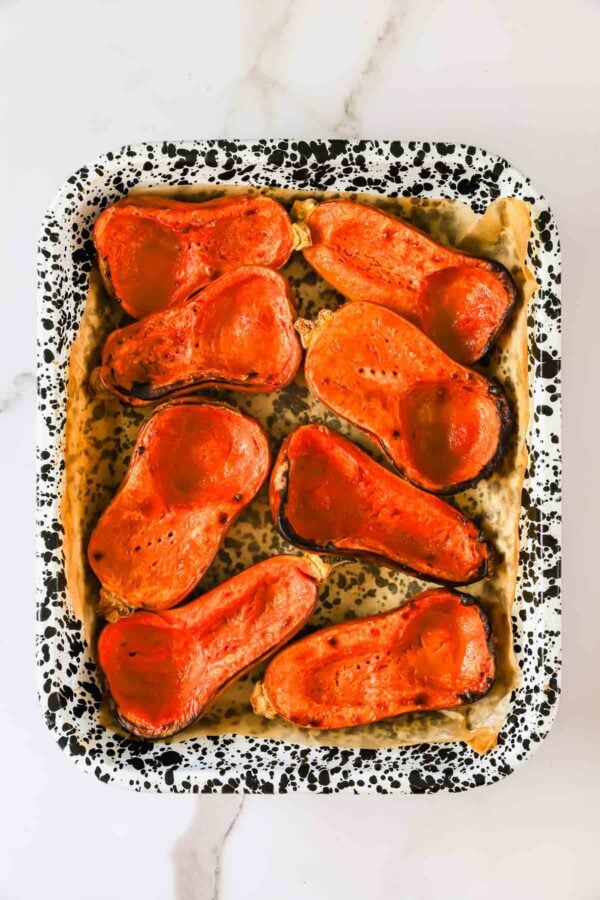
- Chop the garlic: Finely mince the garlic and set aside.
- Roast the squash: Roast for 40–50 minutes, until golden and fork-tender.

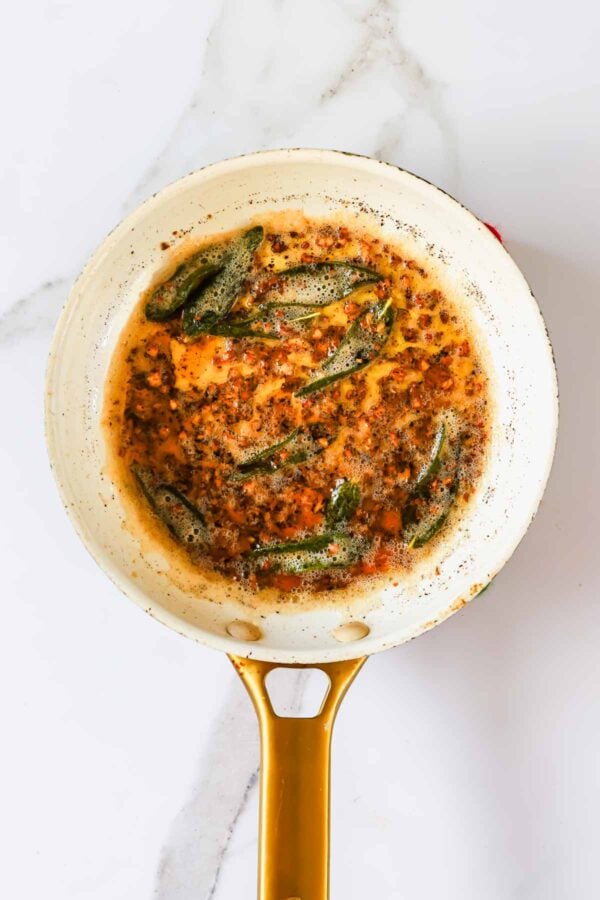
- Sauté the sage: Brown the butter over medium heat, then add the sage and cook for 1–2 minutes, until crisp.
- Add the garlic: Reduce the heat and cook the garlic for 30 seconds. Remove from the heat and stir in the maple syrup.
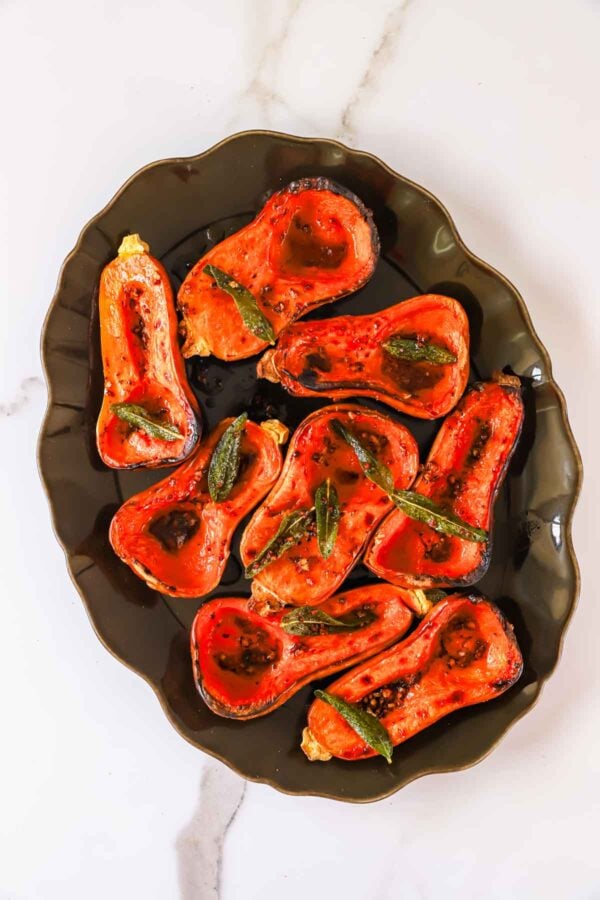
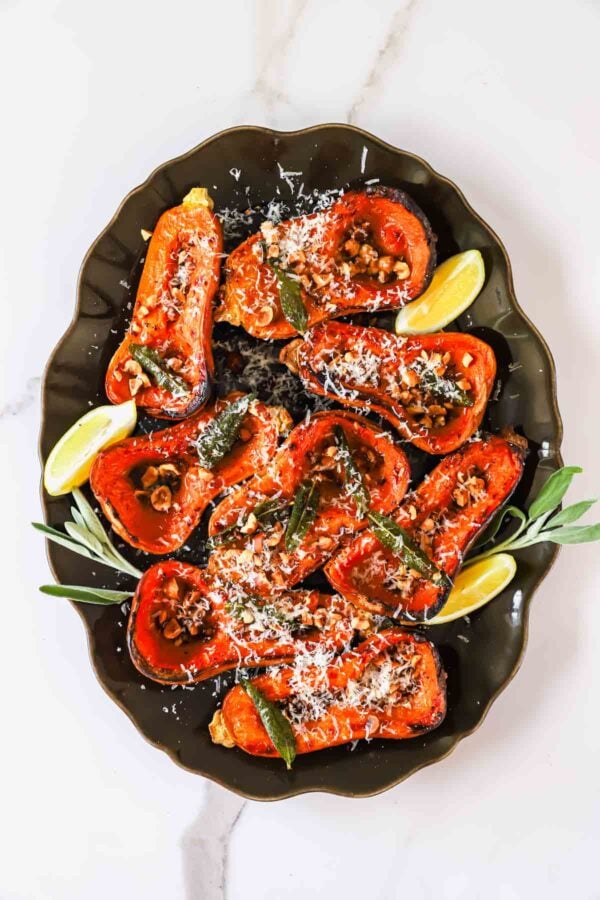
- Dress the squash: Arrange the roasted squash on a platter and spoon the garlic-sage brown butter over it.
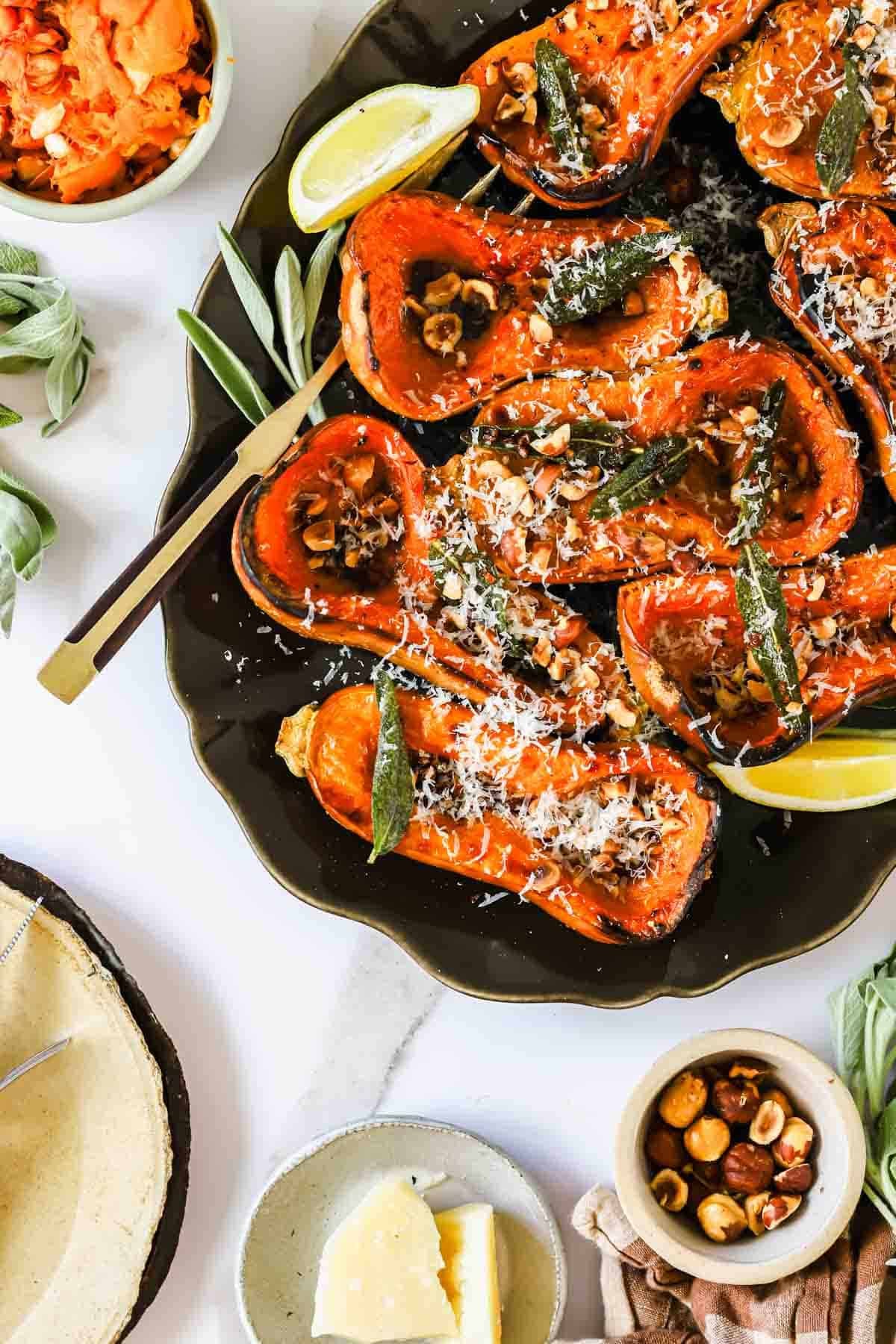
- Finish and serve: Add a squeeze of lemon juice and top with toasted nuts or Parmesan, if desired.
For full list of ingredients and instructions, see recipe card below.
Substitutions & Variations
Here are some of my favorite substitutions and variations:
- Squash Options: I love using honeynut squash for its naturally sweet, creamy texture, but delicata squash or small butternut squash work just as well. Cut them into halves or wedges and adjust the roasting time based on their size.
- Oil Swaps: I usually use olive oil for roasting, but avocado oil is a great alternative. Both help the squash develop golden, caramelized edges.
- Herb Options: Fresh sage is my favorite with brown butter, but you can also use fresh thyme or rosemary. Both pair beautifully with the sweet roasted squash.
What to Serve with Roasted Honeynut Squash
Main Dishes
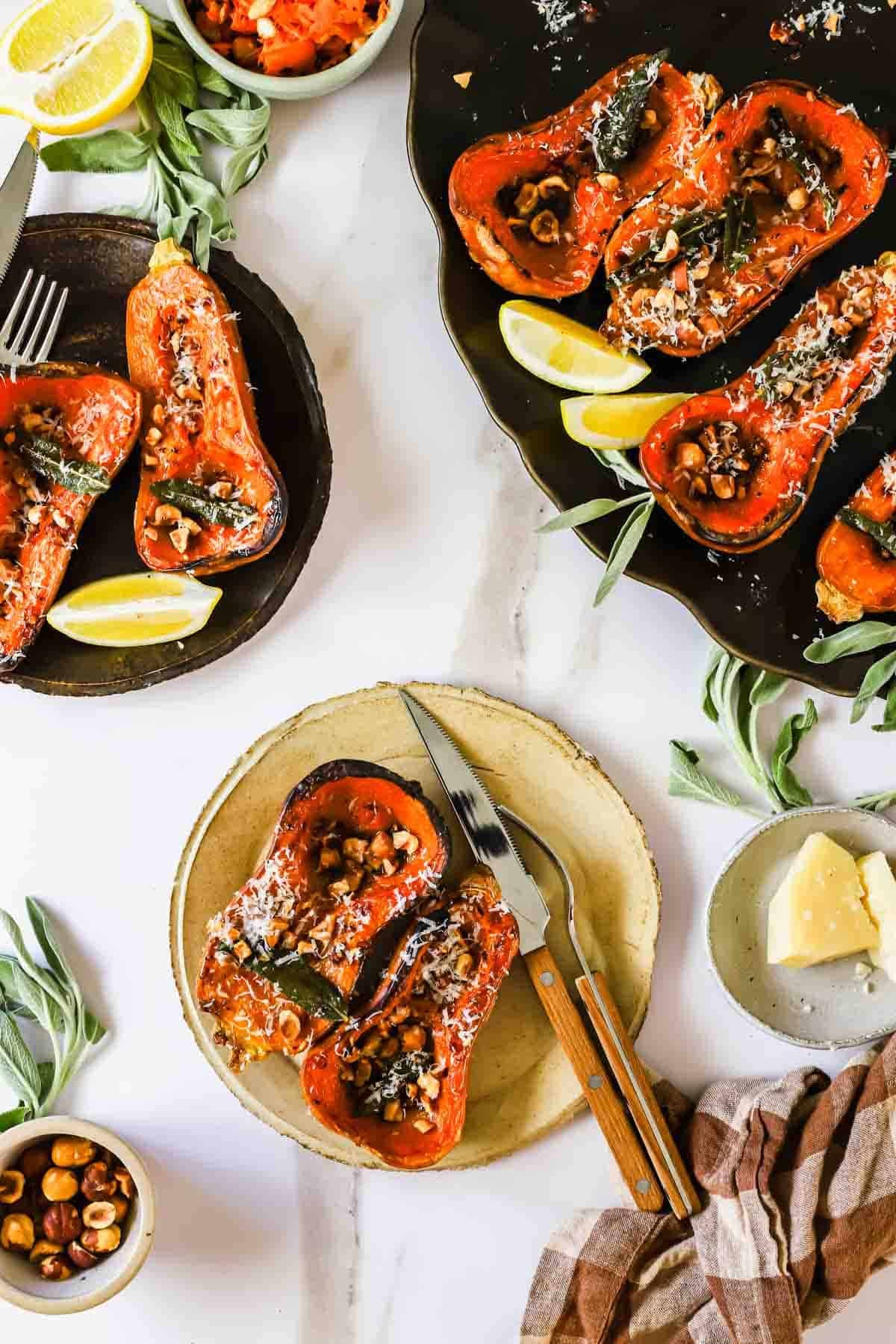
- For a holiday dinner, we love serving this roasted squash alongside Spatchcock Turkey or Slow Roasted Brown Butter And Vanilla Pork Shoulder. The rich, savory flavors complement the natural sweetness of the squash.
- For a cozy Sunday dinner, pair it with Herbed Prime Rib Roast With Horseradish or Apple Cider Braised Beef Roast. Both make a comforting meal with the buttery roasted squash.
Salads
- We love balancing the rich garlic sage brown butter with something fresh and seasonal. Our Fall Salad (With Delicata Squash) or Fall Harvest Salad makes a wonderful addition to the table.
- For a colorful holiday spread, serve the squash with Roasted Beet And Burrata Salad or Roasted Cauliflower Salad With Lemon Tahini Dressing. Both add delicious textures and fresh flavors to balance the meal.
FAQs
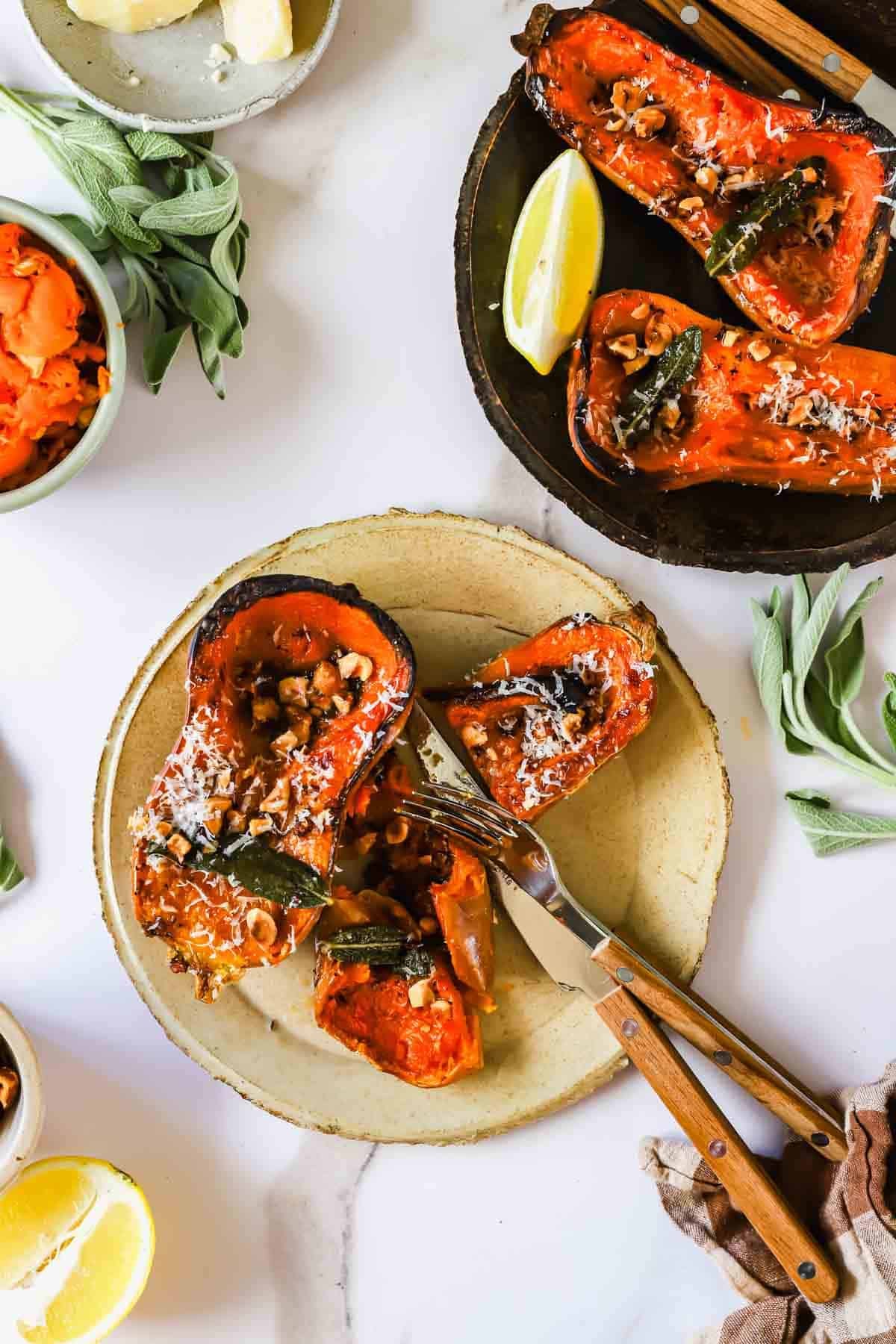
No, there’s no need to peel it! Honeynut squash has thin, edible skin that becomes tender when roasted. You can eat the skin along with the flesh or simply scoop out the soft squash when serving.
The squash is ready when the flesh is soft, golden, and caramelized around the edges. A fork should slide easily into the thickest part without resistance. Depending on the size, this usually takes 40–50 minutes at 425°F.
The squash may be too crowded on the baking sheet, which causes it to steam instead of roast. Make sure there’s space between each half and roast at 425°F. For deeper caramelization, flip the squash cut-side down during the last 10–15 minutes.
Yes, you can roast the squash up to one day in advance and store it in the refrigerator. When you’re ready to serve, warm it in the oven and prepare the garlic sage brown butter fresh. This keeps the squash tender and the sage nice and crispy.
Store leftover roasted honeynut squash in an airtight container in the refrigerator for up to 4 days. Reheat in a 375°F oven for 10–15 minutes until warmed through. You can also freeze the roasted flesh for up to 3 months, although it may be softer once thawed.
More Side Dish Recipes You’ll Enjoy
- Caramelized Onion Mashed Potatoes – Take your usual mashed potatoes up a notch with these caramelized onion mashed potatoes! They’re perfectly rich, savory, and slightly sweet.
- Mediterranean Roasted Vegetables – These Mediterranean Roasted Vegetables are my go-to when I want something colorful, healthy, and full of flavor. They’re simple to make and taste incredible with almost anything. The perfect side for the weeknights and even holiday dinners!
- Creamy Cheesy Polenta – Easy cheesy polenta makes the perfect savory side dish to any meat or veggies. Serve it for breakfast, lunch or dinner. I serve mine with my beef ragu.
- Crispy Roast Potatoes – These Crispy Roasted Potatoes are perfectly seasoned with a crisp, golden-brown exterior and a light, fluffy interior.
If you try this Roasted Honeynut Squash recipe, let me know what you think! Rate and review this recipe in the comments below. Don’t forget to take a picture and tag me on Instagram @lenaskitchenblog!

Roasted Honeynut Squash
Ingredients
- 4 honeynut squash, cut in half and deseeded
- 2 tablespoons olive oil
- ½ teaspoon kosher salt, or more to taste
- 4 tablespoons unsalted butter
- 10 leaves sage, fresh
- 4 cloves garlic, minced
- 1 teaspoon pure maple syrup
- ½ medium lemon, for serving
Optional Toppings:
- pecans, or hazelnuts, toasted and chopped
- Parmesan, freshly grated
Instructions
- Preheat the oven to 425°F. Line a large baking sheet with parchment paper.
- Wash and dry the honeynut squash. Carefully slice each squash in half lengthwise and scoop out the seeds and stringy pulp. If needed, trim a thin slice from the bottom end first to help stabilize the squash while cutting.
- Arrange the squash halves cut-side up on the prepared baking sheet. Drizzle with the olive oil, rub it over the flesh, and season evenly with the kosher salt.
- Roast for 40–50 minutes, depending on the size of the squash, until the flesh is deeply golden in spots and a fork slides easily into the thickest part. For more caramelization, flip the squash cut-side down for the last 10–15 minutes.
- During the last few minutes of roasting, melt the butter in a small skillet over medium heat. Continue cooking, swirling the pan, until the butter foams and develops golden-brown flecks and a nutty aroma, about 3–5 minutes.
- Add the sage leaves and cook for 1–2 minutes, until crisp. Reduce the heat to low, add the minced garlic, and cook for about 30 seconds, just until fragrant. Immediately remove the skillet from the heat to prevent burning, then stir in the maple syrup.
- Arrange the roasted squash on a platter and spoon the garlic-sage brown butter over the top. Add a small squeeze of lemon juice to balance the richness, if desired. Finish with the optional toasted nuts or Parmesan for extra texture and flavor.
Notes
- Choose similar-sized squash. Pick honeynut squash that are roughly the same size so they roast evenly. Smaller squash may cook faster, so start checking for tenderness around 35 minutes.
- Make cutting easier. Honeynut squash has firm skin, so use a sharp knife and a stable cutting board. Microwave the whole squash for 30–60 seconds if it’s difficult to cut.
- Don’t overcrowd the pan. Leave some space between the squash halves so the hot air can circulate. This helps the edges caramelize instead of steam.
- Roast cut-side down for extra caramelization. Flip the squash during the last 10–15 minutes of roasting. Direct contact with the hot baking sheet helps develop deeper golden edges.
- Check for tenderness. The squash is ready when a fork easily slides into the thickest part. Avoid overcooking, or the flesh can become too soft.
- Watch the brown butter closely. Butter can go from perfectly golden to burnt in seconds. Swirl the pan frequently and remove it from the heat once you see golden-brown flecks and smell a nutty aroma.
- Add the garlic last. Garlic burns quickly in hot butter, so add it after the sage has crisped up. Cook for about 30 seconds, just until fragrant.
- Save the squash seeds. Rinse and dry the seeds, then toss them with olive oil and salt. Roast until crispy for an easy, crunchy topping.
- Finish with fresh lemon. A small squeeze of lemon juice balances the richness of the garlic sage brown butter and brings out the squash’s natural sweetness.
- Make it ahead. Roast the squash up to one day in advance and refrigerate. Reheat at 375°F for 10–15 minutes, then prepare the brown butter fresh before serving.
- Store leftovers properly. Keep leftover squash in an airtight container in the refrigerator for up to 4 days. Store the brown butter separately when possible to preserve the texture.
- Use leftovers creatively. Scoop out the roasted flesh and add it to soups, grain bowls, or fall salads. You can also freeze the flesh for up to 3 months for later use.


Leave a Reply